

Calming Strategies Not Working? How to Help a Child Through a Meltdown
5–6 min read
Published
An illustration inspired by Glimp’s story. Every child’s sensory preferences are different.
You have practiced breathing, offered a fidget, and created a calming corner. Yet when your child or student becomes overwhelmed, none of it seems to help.
That does not automatically mean the child is refusing support—or that you have failed. The strategy may be difficult to access, poorly matched to their needs, or offered while the source of distress continues.
During a meltdown, prioritize safety, reduce overwhelming input, and offer responsive adult support. Teach and explore coping tools later, when the child can comfortably participate. This approach is especially relevant in preschool through second grade, including for some autistic and ADHD learners.
Why Calming Strategies May Not Help During a Meltdown
A meltdown is an intense response to overwhelm, not simply another word for anger. A child may cry, yell, run away, or struggle to process what adults are saying. Other overwhelmed children become quiet or withdraw. Appearance alone cannot tell you what someone is experiencing. [1]
Not every episode of crying, anger, or withdrawal is a meltdown. Similar behavior can reflect pain, illness, frustration, or unmet communication needs. Avoid deciding what is happening from appearance alone. [11]
Consider three questions before adding another tool:
- Timing: Can the child process a suggestion right now?
- Fit: Does this particular activity feel helpful to them?
- Environment: Is the noise, uncertainty, discomfort, or task difficulty still present?
A breathing exercise cannot remove a painful sound. A feelings chart may be inaccessible when choosing or speaking is difficult. Start by making the situation more manageable, rather than asking the child to manage everything internally.
During the Meltdown: Make Support Easier to Receive
Begin with safety. Move nearby children and dangerous objects away when possible, maintain appropriate supervision, and follow the child's existing safety plan, if there is one. Give the child space. Offer comforting touch only when it is welcome, and stop if it increases distress. This article does not provide instructions for physical restraint. In school, seek trained assistance and follow applicable emergency procedures if there is an immediate risk of serious injury. [2, 8]
Next, reduce input. Pause nonessential instructions, lower your voice, and address obvious sources of overload. That might mean stopping background music or offering access to a familiar quieter space. Darkness, silence, and hugs are not universally comforting; follow the child's preferences. [1, 2]
Use brief, concrete language:
“I'm here. We can pause.”
Then allow processing time. Repeated questions, explanations, or demands to name a feeling can become additional work. Keep the child's usual communication supports available, such as gestures, picture cards, or an augmentative and alternative communication (AAC) system. [1, 9]
Co-regulation means offering responsive adult support that helps a child feel safer and manage demands. It includes a warm relationship, a supportive environment, and opportunities to learn regulation skills over time. During a meltdown, focus on safety and connection; practice coping skills later, when the child can comfortably participate. [3, 5]
Safety boundaries still matter. If hitting occurs, calmly create distance and protect others. Supporting distress does not mean allowing injury. Avoid turning the moment into a lesson; address what happened once everyone can participate safely.
Before the Next Difficult Moment: Explore, Don't Test
When the child is comfortable, explore what helps through short, optional experiences. Try a familiar movement break, a quieter activity, or gentle breathing if the child enjoys it. Notice their response rather than assuming a strategy works because it appears on a poster.
Interoception means noticing and interpreting internal body signals. Some children notice a faster heartbeat or muscle tension; others do not identify an early change. Not recognizing a cue does not make them responsible for the meltdown.
Body signals can also be difficult to notice during everyday routines. Read our guide to interoception and hunger cues for another example.
Occupational therapist Kelly Mahler suggests approaching a child's internal experience with curiosity rather than assuming what they feel. You might say, “I wonder whether anything feels different,” without expecting an answer. Accept “I don't know,” a gesture, or no response, and continue offering support. [4]
Do not equate regulation with stillness. Harmless rocking, pacing, or hand movements may help an autistic child regulate or communicate. The goal is comfort and safe participation, not looking calm for adults. [2]
Share observations with the child's family and school team. If the child has an Individualized Education Program (IEP), behavior support plan, or safety plan, work together to keep support consistent and review what needs to change. [10]
Make the Calming Corner an Invitation
A calming corner is an optional support space, not a destination a child must earn or a place to send them away for having feelings. Introduce it during comfortable moments and explore it together.
Keep the setup simple and individualized. One child may prefer headphones and a familiar book; another may find the corner uncomfortable or want more space. Adult support can remain available without hovering.
If the child declines the corner, consider another safe option. A support space should not become forced isolation, and the child should not have to finish a breathing exercise before leaving.
Use a Visual Story When the Child Is Ready
Glimp's Volcano Feeling: Understanding My Meltdowns uses an illustrated volcano metaphor to describe overwhelm, body changes, and recovery. It offers a starting point for conversation without revisiting a personal incident immediately.
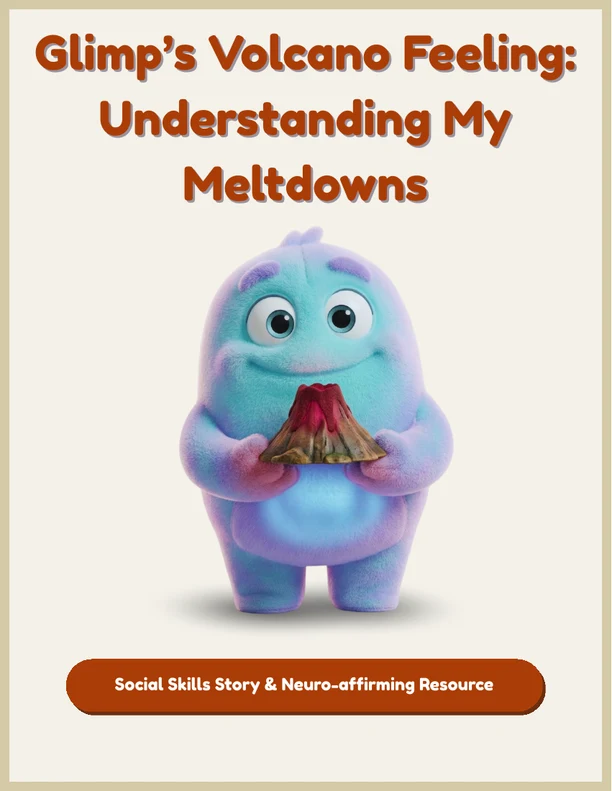
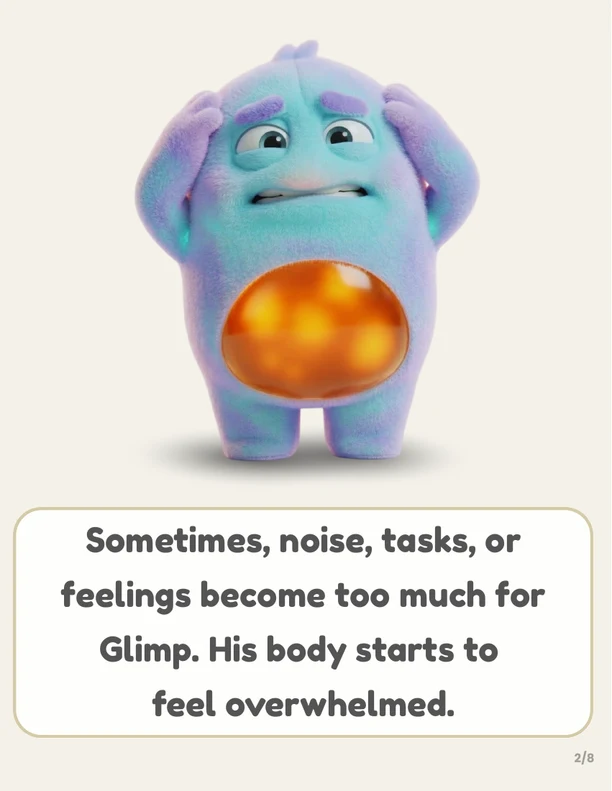
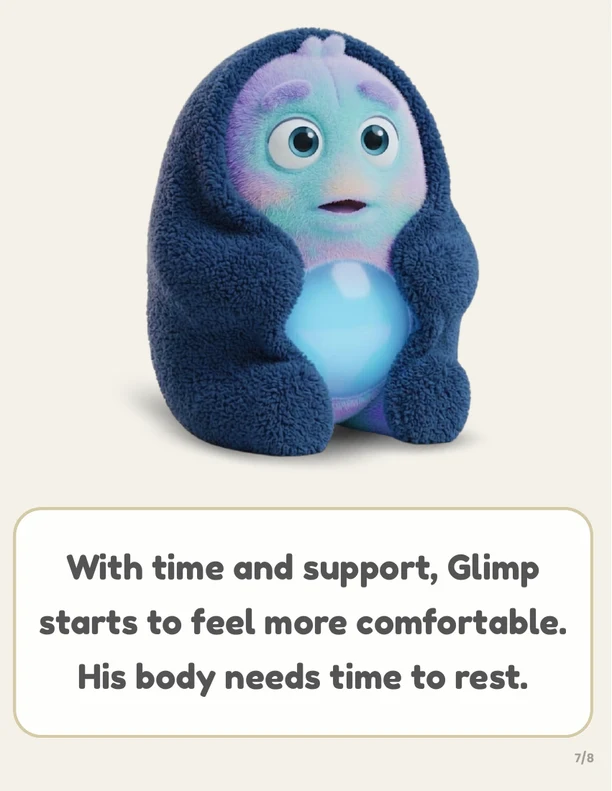
Read it during a comfortable moment, not as an instruction to stop a meltdown. Ask, “What might help Glimp?” Then make room for differences: “Your body might feel different, and different things might help you.” Skip discussion if the child is not interested.
Treat the volcano and brain-guard imagery as metaphors, not a complete explanation of brain function. Noise or demands can be genuinely overwhelming, even when adults see no danger.
Explore Glimp's Volcano Feeling on Teachers Pay Teachers.
This is an educational visual resource, not a treatment or a proven way to prevent meltdowns. Research on individualized social stories reports benefits for some outcomes, but findings vary. These studies do not establish the effectiveness of this particular product. [6, 7]
Afterward: Recovery Before Reflection
Allow time to recover without demanding an immediate explanation or apology. Later, briefly discuss what made the situation difficult and what adults could change. The American Academy of Pediatrics recommends helping a stressed child regulate and connect before reasoning together. [5]
Consider recurring patterns such as poor sleep, discomfort, difficult transitions, or overwhelming environments. Seek professional guidance for frequent, worsening, or unsafe episodes, sudden changes, or difficulties affecting daily life. Assessment should explore underlying needs rather than assume an anger-management problem. If there is immediate danger you cannot manage safely, seek emergency help. [11]
Frequently Asked Questions
How can I help a child having a meltdown?
Prioritize safety, reduce overwhelming input, and offer calm adult support. Use brief language, allow processing time, and keep communication supports available. Follow any existing safety plan. Explore coping tools later, when the child can comfortably participate. [1, 3, 5]
Should I insist on deep breathing?
No. Offer it when welcome, but stop if it adds distress. It is one possible tool, not a requirement.
Can a child need co-regulation even after learning coping skills?
Yes. Knowing a skill and accessing it under stress are different. Adult support can remain appropriate.
What if no early warning signs are obvious?
Provide support anyway. Explore patterns later without expecting the child to predict every meltdown.
Sources
- National Autistic Society — Meltdowns: a guide for all audiences
- National Autistic Society — Autism and sensory processing
- Rosanbalm & Murray (2017) — Co-Regulation From Birth Through Young Adulthood: A Practice Brief
- Kelly Mahler — Interoception and Early Learners
- American Academy of Pediatrics — Why Kids Act Out: Tips to Help Your Child Cope With Stress
- Wright et al. (2024) — Impact of Social Stories on social and emotional health: the ASSSIST2 RCT
- Guo et al. (2026) — The effects of social story interventions: a meta-analysis of single-case experimental studies
- U.S. Department of Education — Seclusions and Restraint Statutes, Regulations, Policies and Guidance
- American Speech-Language-Hearing Association — Augmentative and Alternative Communication (AAC)
- U.S. Department of Education (2024) — Using Functional Behavioral Assessments to Create Supportive Learning Environments
- NICE — Autism spectrum disorder in under 19s: support and management, recommendations on factors contributing to behavior that challenges
General educational information, not individualized medical, psychological, or crisis advice.
Prepared by Anchor Point Visuals. Source links checked: . This article has not received independent clinical review.